A practical guide to choosing an industrial peeler for your kitchen
In a busy commercial kitchen, every minute spent preparing ingredients matters. Peeling potatoes and other vegetables by hand takes time and labor, and frequent handling can make hygiene harder to manage. An industrial upright peeler helps streamline this repetitive task so staff can focus on cooking and service.
Pooya Sanat manufactures a range of commercial kitchen equipment, including the large 450 kg/h upright peeler. Before choosing a model, it helps to understand how these machines work and which buying decisions have the greatest impact on your kitchen.
What Is an Upright Peeler?
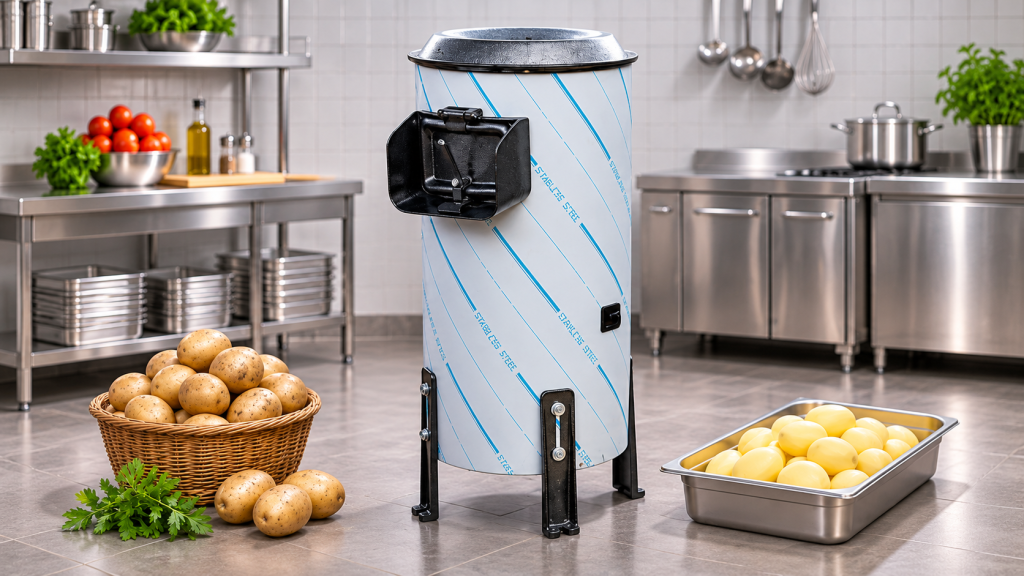
An upright peeler is a mechanized appliance designed to peel potatoes and other produce. Ingredients are placed in a chamber, where rotation and an abrasive surface remove the skin. Compared with manual or countertop methods, upright machines generally provide greater throughput for restaurants, hotels, catering facilities, banquet halls and other commercial kitchens. Suitability for carrots, onions and other produce depends on the machine and its configuration.
Pooya Sanat’s 450 kg/h Upright Peeler
The large Pooya Sanat upright peeler is designed for high-volume commercial preparation. Its listed specifications include:
| Criterion | What to check |
|---|---|
| Output | 450 kg per hour |
| Motor power | 1.5 hp |
| Dimensions | 120 × 50 × 50 cm |
| Weight | 60 kg |
| Body | Stainless steel |
| Warranty | 12 months |
| After-sales service | 10 Years |
How an Upright Peeler Helps a Busy Kitchen
An industrial peeler can process large quantities in less time, allowing staff to concentrate on cooking and other preparation tasks. Reducing repetitive manual peeling can also help manage labor costs and reduce direct handling of ingredients.
The abrasive action removes the outer layer of produce. Actual yield and waste depend on the ingredient, machine settings and peeling time, so operators should monitor each batch and follow the manufacturer’s guidance.
Where Upright Peelers Are Used
- Restaurants and fast-food outlets preparing fries and other potato dishes.
- Caterers and meal-preparation businesses handling large orders on tight schedules.
- Hotels and banquet venues serving large events.
- Food manufacturers preparing ingredients for ready-to-cook products.
Five Common Buying Mistakes to Avoid
1. Choosing the Wrong Capacity
A machine that is too small can slow preparation during peak periods. One that is much larger than needed can increase upfront costs and occupy valuable kitchen space.
What to do: Estimate your average daily volume and your busiest preparation period, then choose a machine with a suitable hourly capacity.
2. Overlooking the Drive Mechanism
Industrial peelers may use belt or gear drives. Belt-driven designs may cost less initially, but their belts require inspection and eventual replacement. Gear-driven machines are often considered for demanding workloads. Durability, maintenance requirements and suitability for continuous use depend on the design and operating conditions.
What to do: Ask the supplier about the drive type, recommended duty cycle, maintenance schedule and replacement parts for the specific model.
3. Ignoring Materials and Cleanability
The body and food-contact components affect durability and cleaning. Painted or ordinary materials can corrode, while inaccessible corners can make cleaning more difficult.
What to do: Check the materials used for the body and food-contact surfaces, and choose a machine whose components can be cleaned properly. Stainless steel is commonly selected for its corrosion resistance.
4. Forgetting After-Sales Support
A low purchase price offers little comfort if the machine stops and spare parts or a qualified technician are difficult to find. Repairs and downtime can interrupt kitchen service.
What to do: Check the warranty, availability of spare parts, repair arrangements and length of after-sales support before placing an order.
5. Failing to Check Space and Utilities
A machine that does not fit its intended location or cannot be connected to the available electrical and water supplies can delay installation.
What to do: Measure the machine and installation area, allow room for operation and cleaning, and confirm the electrical and water requirements with the supplier.
Conclusion
The right upright peeler can make high-volume ingredient preparation faster and help kitchen teams manage labor and workflow. Start with your production requirements, then check the machine’s drive, construction, service support and installation needs. Pooya Sanat’s 450 kg/h upright peeler is one option for kitchens looking for substantial peeling capacity and manufacturer support.